

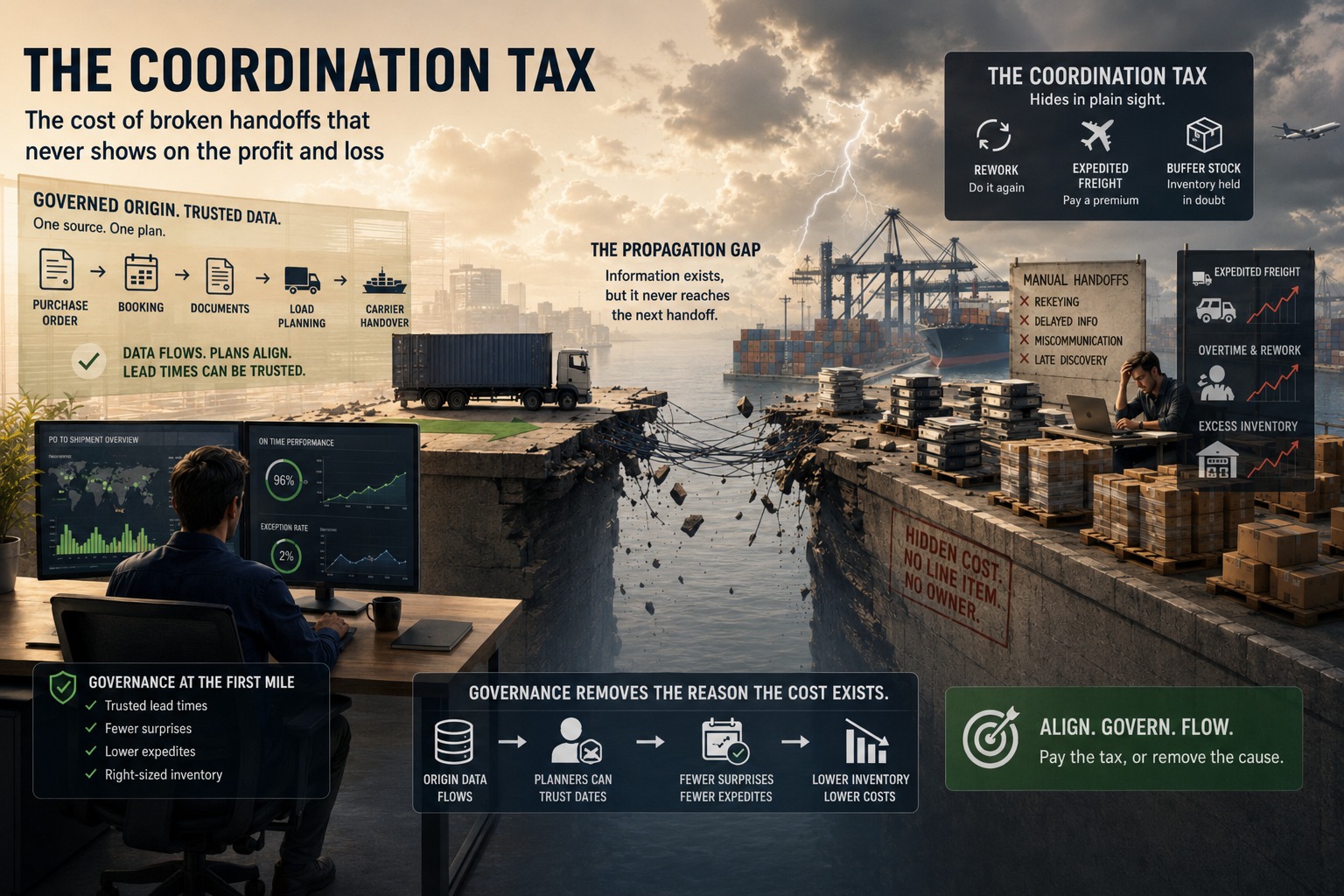
The cost of broken handoffs that never shows on the profit and loss
Inventories at almost three hundred large companies rose by about eleven percent between 2018 and 2021. McKinsey counted it. Most of that build is filed as prudence. A good share of it is a bill.
The easy reading is that bigger buffers mean a safer supply chain. I read it differently. Much of that inventory is a coordination tax, the cost of handoffs that break at the edge of the chain, paid in stock that no one ever chose to call waste.
A cost with no line item
The coordination tax is what you pay when the parts of a shipment do not line up. It shows up in three places. Rework, when a booking or a document has to be done again. Expedited freight, when something is caught late and has to be rushed at a premium. And buffer stock, the inventory you hold because you do not trust the date you were given. None of these arrives labelled. The tax hides inside the freight bill, inside overtime, and inside the warehouse. No one signs off on a cost called coordination, so no one manages it.
Where the tax is levied
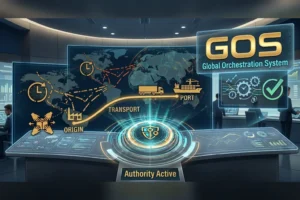
It is levied at the first mile, the origin leg from purchase order to carrier handover. That is where the data is captured and where it stops moving. When purchase order facts do not reach load planning and the shipment timeline, procurement cannot trust the lead time it was quoted, so it orders earlier and holds more to be safe. When booking and documentation are still manual, mistakes surface late, and late mistakes are the expensive kind. The handoff that fails quietly at origin is paid for, with interest, everywhere downstream.
Call the root cause the propagation gap. The information that would let a planner trust a date exists, but it never reaches the planner. So the planner buys certainty the only way left to them, with stock and with expedites. That is the tax.
Why it stays hidden
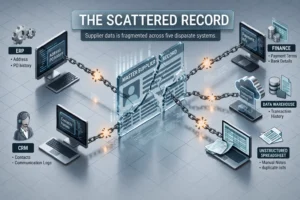
A visible cost gets a budget and an owner. The coordination tax gets neither, because it is spread across functions that each see only their share. Procurement sees inventory. Logistics sees freight. Finance sees a number that will not come down and cannot say why. Each is looking at the same tax from a different window, and no one is looking at the handoff that creates it.
How governance lowers the bill
The fix is not a tighter inventory target. It is governing the origin leg so the doubt that the tax pays for goes away. When origin data flows into planning without rekeying, lead times can be trusted, and a trusted lead time is the only thing that lets a buffer come down safely. When the first mile has one owner and one plan, fewer shipments need rescuing, so the expedite premium falls. Governance does not squeeze the cost. It removes the reason the cost exists.
So before the next push to cut inventory or freight spend, it is worth asking a different question. How much of what you are carrying is not safety stock at all, but a coordination tax you have never named, and never sent back to where it was levied.
References
McKinsey and Company, Taking the pulse of shifting supply chains, 2022. Figures on rising inventories, including the average 11 percent increase across almost 300 listed companies between 2018 and 2021, and 80 percent of respondents increasing inventories during 2021. https://www.mckinsey.com/capabilities/operations/our-insights/taking-the-pulse-of-shifting-supply-chains