


A new series challenging conventional thinking on supply chain visibility Digital Optima has launched a new thought leadership series exploring some of the most pressing questions facing modern supply chains, opening with a piece that challenges one of the industry’s most widely accepted assumptions.
The series’ first contributor is Sławomir Wyciślak, Associate Professor at Jagiellonian University in Kraków, who joins Digital Optima as a regular contributor. Sławomir combines more than 20 years of academic research with 20 years of industry experience, including roles with Unilever. He is the author of Real-Time Visibility in Supply Chain Management (Routledge, 2024), and his research focuses on supply chain governance, digital platforms, AI, automation, and first-mile operations.
What the series covers
The series explores some of the biggest questions facing modern supply chains, including:
- Why does the first mile remain one of the least governed parts of the supply chain?
- Are companies investing too heavily in visibility while overlooking coordination?
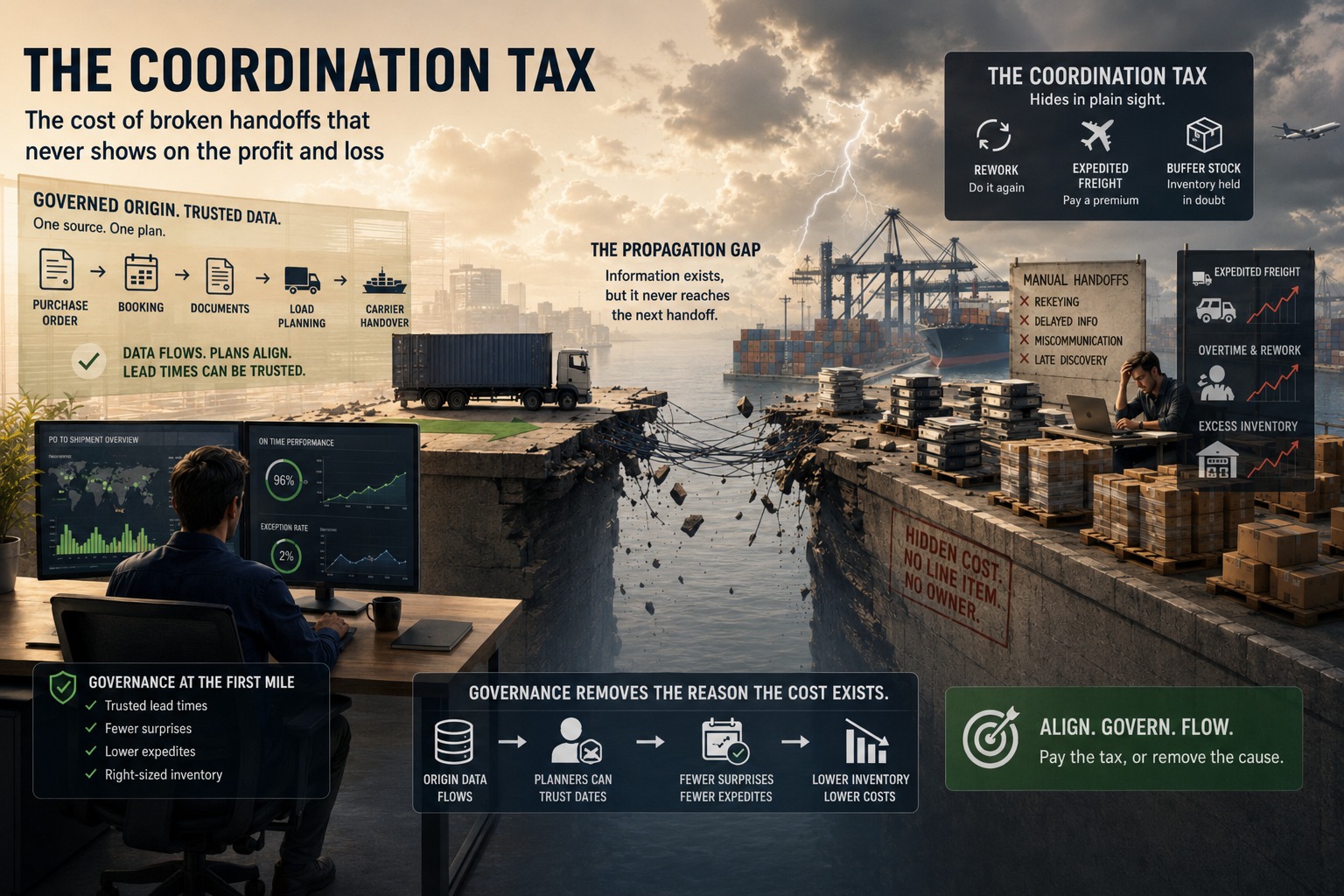
- What is the hidden “coordination tax” costing procurement, logistics, and finance teams every day?
- How will AI shift supply chains from passive visibility to active governance?
These are not theoretical discussions. Each piece offers practical insight intended to challenge established thinking and help supply chain leaders improve real-world performance.
The opening article: rethinking the first mile
The series begins with an article that starts from a familiar statistic. According to McKinsey & Company, 45 percent of companies have no visibility into their upstream supply chain, or can see only as far as their first-tier suppliers.
The usual conclusion drawn from that number is that companies need more visibility. Sławomir argues otherwise. His view is that the first mile isn’t fundamentally a visibility problem. It’s a governance problem. Better tracking alone won’t solve it if the information it produces isn’t coordinated, shared, and acted upon across the supply chain.
The article sets out why this distinction matters, and what companies should do differently as a result.
If you’re involved in procurement, logistics, transportation, or supply chain transformation, this series is worth following.